
AI and Data Sovereignty: The Complete Guide for Canadian Businesses (2026)
Artificial Intelligence (AI) is transforming industries across Canada, helping organizations automate operations, improve customer experiences, strengthen decision-making, and unlock new opportunities for growth. However, as businesses adopt AI at scale, one critical question continues to emerge:
Who controls the data that powers AI?
The answer lies in AI and data sovereignty—a strategic approach that enables organizations to retain control over their data, comply with regulations, and deploy AI responsibly.
Whether you’re a healthcare provider, financial institution, government agency, manufacturer, or growing business, understanding AI sovereignty is essential for building secure and trustworthy AI solutions.
What Is AI Sovereignty?
AI sovereignty refers to an organization’s ability to build, deploy, and manage AI technologies while maintaining control over its:

- Data
- Infrastructure
- AI models
- Security
- Compliance
- Governance
Rather than relying entirely on third-party AI services, sovereign AI ensures organizations know where their data is stored, who can access it, and how it is processed.
Simply put, sovereign AI gives businesses greater ownership, transparency, and control over their AI ecosystem.
Featured Snippet: What Is Data Sovereignty?
Data sovereignty is the principle that digital information is governed by the laws and regulations of the country where it is stored. For Canadian organizations, data sovereignty helps ensure compliance with privacy regulations while protecting sensitive customer and business information.
Why AI and Data Sovereignty Matter
1. Regulatory Compliance
Organizations handling sensitive information must comply with privacy laws, industry standards, and contractual obligations.
A sovereign AI strategy helps businesses better align with evolving legal and regulatory requirements.
2. Enhanced Cybersecurity
AI systems often process:
- Customer information
- Financial records
- Intellectual property
- Healthcare data
- Employee records
Maintaining control over AI infrastructure reduces unnecessary exposure and strengthens security.
3. Increased Customer Trust
Customers expect businesses to protect their personal information.
Organizations that demonstrate responsible AI practices and transparent data governance can strengthen long-term customer relationships.
4. Business Continuity
Owning your AI strategy reduces dependence on external providers and improves operational resilience.
Industries That Benefit Most
AI sovereignty is especially valuable for organizations that manage regulated or confidential information, including:
- Healthcare
- Government
- Banking & Financial Services
- Insurance
- Manufacturing
- Legal Services
- Education
- Energy & Utilities
- Telecommunications
Key Components of a Sovereign AI Strategy
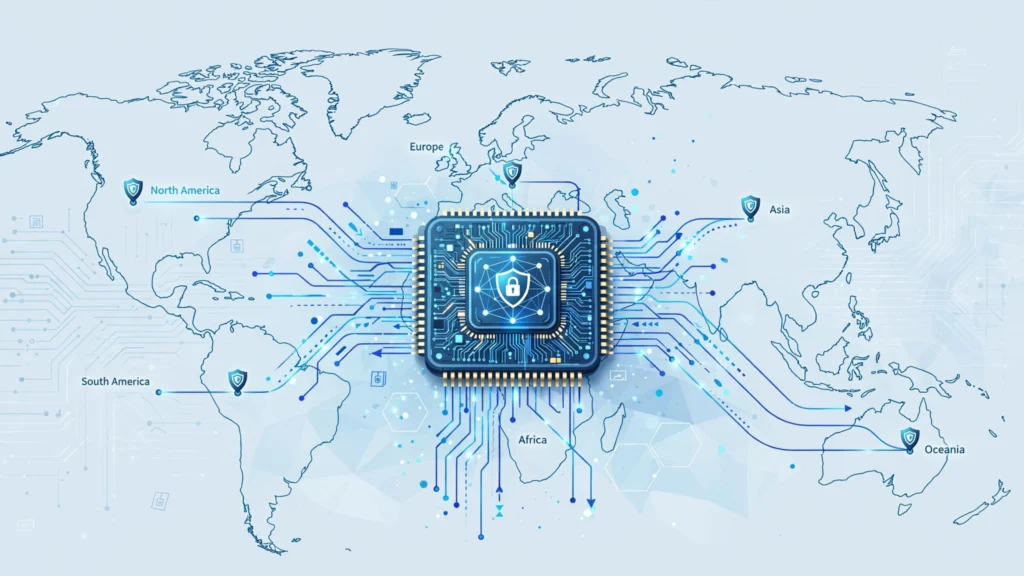
A successful strategy typically includes:
Secure Infrastructure
Use trusted cloud environments or hybrid infrastructure with regional data residency options.
Identity & Access Management
Restrict access using role-based permissions and multi-factor authentication.
Data Governance
Create clear policies for data ownership, classification, retention, and usage.
Responsible AI
Establish governance frameworks that promote transparency, fairness, and accountability.
Continuous Monitoring
Monitor AI systems for security, compliance, and performance throughout their lifecycle.
Common Challenges
Organizations adopting sovereign AI may encounter:
- Legacy technology
- Limited AI expertise
- Integration complexity
- Regulatory uncertainty
- Infrastructure investment
- AI governance requirements
Working with an experienced technology partner can help reduce implementation risks.
Best Practices
Organizations should:
- Identify sensitive data
- Classify business information
- Encrypt data in transit and at rest
- Implement Zero Trust security
- Regularly audit AI systems
- Establish AI governance committees
- Train employees on responsible AI
- Review compliance requirements regularly
Benefits of AI Sovereignty
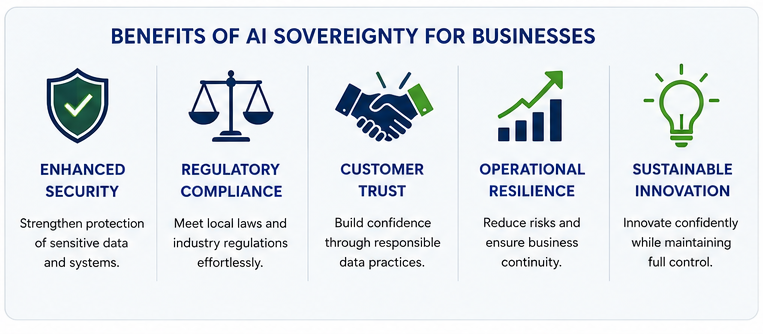
Businesses that invest in sovereign AI can achieve:
- Greater control over business data
- Stronger cybersecurity
- Improved regulatory compliance
- Better customer confidence
- Lower operational risk
- Increased transparency
- Long-term scalability
How Qualkom Can Help
At Qualkom, we help organizations confidently adopt AI while prioritizing security, governance, and compliance.
Our services include:
- AI Strategy & Consulting
- Custom AI Solutions
- Cloud Architecture
- Microsoft Azure Services
- Cybersecurity Consulting
- AI Governance Frameworks
- Data & Analytics
- Digital Transformation
- Custom Software Development
Whether you’re starting your AI journey or scaling enterprise AI initiatives, our team can help you build secure, future-ready solutions.
Frequently Asked Questions
What is AI sovereignty?
AI sovereignty is the ability to control AI technologies, data, infrastructure, and governance while complying with applicable laws and protecting sensitive information.
Why is data sovereignty important for AI?
AI systems depend on large amounts of data. Maintaining control over where that data is stored and how it is processed helps organizations improve security, privacy, and regulatory compliance.
What industries need sovereign AI?
Healthcare, government, financial services, manufacturing, education, legal, insurance, and other sectors handling sensitive or regulated information benefit from sovereign AI strategies.
Is sovereign AI only for large enterprises?
No. Small and medium-sized businesses can also benefit from sovereign AI by adopting secure cloud architectures, implementing strong governance practices, and selecting technology partners that support regional compliance.
Final Thoughts
AI is becoming a cornerstone of business innovation, but sustainable success requires more than advanced algorithms. Organizations must also ensure that data remains secure, governed responsibly, and aligned with regulatory expectations.
By embracing AI and data sovereignty, businesses can unlock the benefits of artificial intelligence while protecting sensitive information, maintaining compliance, and building lasting trust with customers.
As AI continues to evolve, organizations that prioritize sovereignty today will be better prepared to innovate with confidence tomorrow.