
Top Cybersecurity Threats Every Business Should Prepare for in 2026
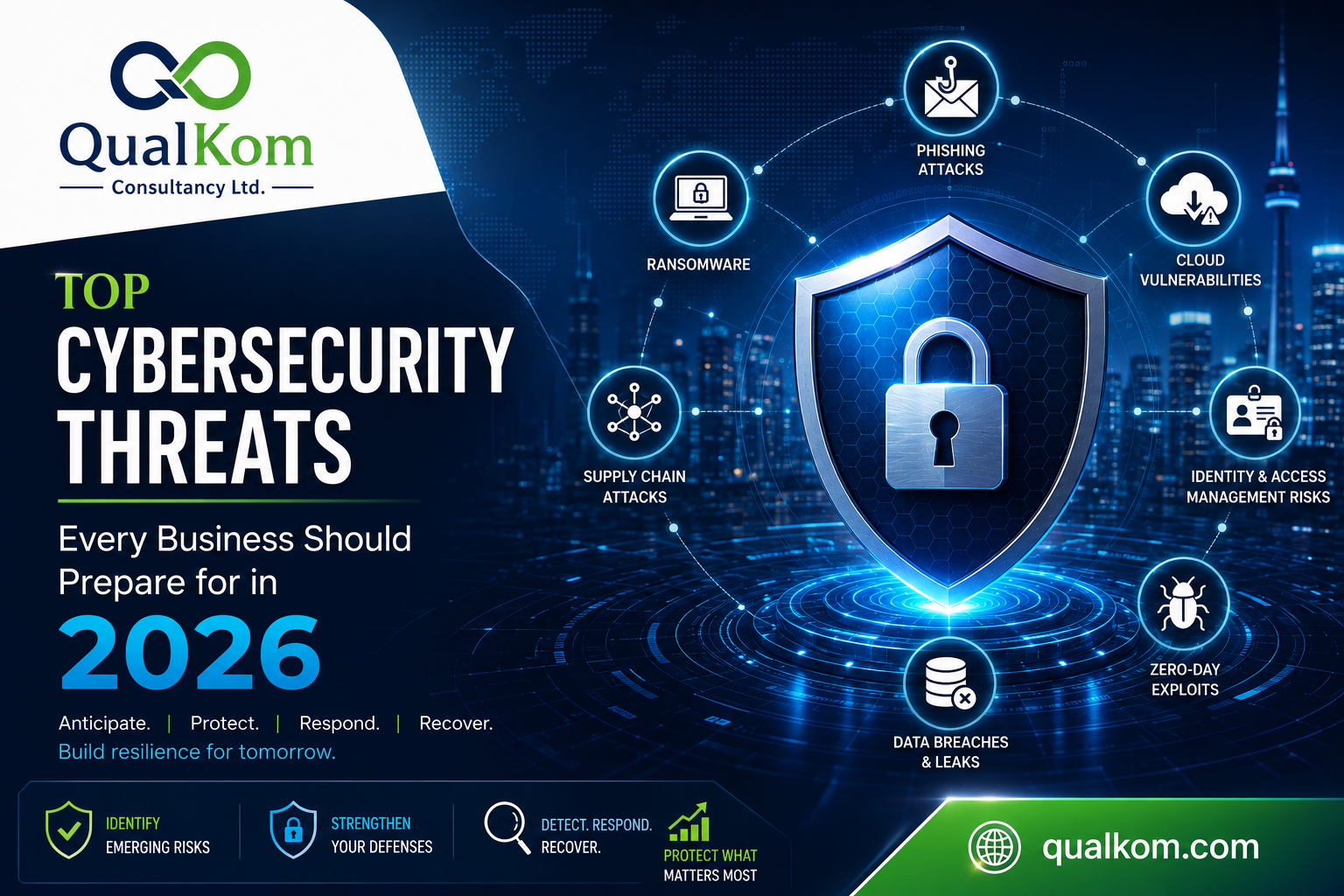
Table of Contents
- Introduction
- Why Cybersecurity Matters More Than Ever
- The Top 10 Cybersecurity Threats in 2026
- Industries Most at Risk
- How AI Is Changing Cybersecurity
- Best Practices to Protect Your Business
- Why Partner with a Cybersecurity Expert
- Frequently Asked Questions
- Final Thoughts
Cybersecurity is no longer just an IT concern—it’s a business imperative. As organizations embrace cloud computing, artificial intelligence (AI), remote work, and connected devices, the cyber threat landscape has become more sophisticated than ever.
In 2026, cybercriminals are using AI-powered tools, advanced ransomware, phishing campaigns, and supply chain attacks to target businesses of every size. A single breach can result in financial losses, operational disruption, regulatory penalties, and reputational damage.
Whether you’re a startup, a growing enterprise, or a public sector organization, understanding the latest cybersecurity threats is essential for protecting your data, systems, and customers.
Why Cybersecurity Matters More Than Ever
Modern businesses rely on digital platforms for nearly every aspect of their operations—from customer engagement and financial transactions to cloud collaboration and remote work.
As digital transformation accelerates, so does the attack surface available to cybercriminals. Organizations must adopt proactive security strategies that combine technology, governance, and employee awareness.
Key business risks include:
- Data breaches
- Financial fraud
- Business interruption
- Intellectual property theft
- Compliance violations
- Loss of customer trust
Investing in cybersecurity is not just about preventing attacks—it’s about enabling resilient and sustainable business growth.
Top 10 Cybersecurity Threats Every Business Should Prepare for in 2026
1. AI-Powered Cyber Attacks
Cybercriminals are increasingly leveraging artificial intelligence to automate phishing campaigns, identify vulnerabilities, generate convincing social engineering messages, and evade traditional security controls.
Organizations should invest in AI-enhanced security tools capable of detecting anomalous behavior and responding in real time.
2. Ransomware
Ransomware remains one of the most damaging cyber threats, encrypting critical business data and demanding payment for its release.
Prevention strategies include:
- Regular offline backups
- Endpoint detection and response (EDR)
- Multi-factor authentication
- Employee awareness training
- Timely software updates
3. Phishing and Business Email Compromise
Sophisticated phishing emails now use AI-generated content that closely mimics legitimate communications.
Businesses should implement:
- Email security gateways
- Multi-factor authentication
- Security awareness training
- Domain protection
4. Supply Chain Attacks

Attackers increasingly target third-party vendors and software providers to gain indirect access to multiple organizations.
Regular vendor risk assessments and software validation are critical.
5. Insider Threats
Not all threats originate from outside the organization. Insider threats—whether malicious or accidental—can expose sensitive information through poor security practices or unauthorized access.
Role-based access controls and activity monitoring help reduce this risk.
6. Cloud Security Misconfigurations
As businesses migrate workloads to the cloud, improperly configured storage, identities, or permissions can expose sensitive data.
Regular cloud security assessments and continuous monitoring are essential.
7. Credential Theft
Weak or reused passwords remain a common attack vector.
Best practices include:
- Password managers
- Multi-factor authentication
- Password less authentication where possible
- Regular credential audits
8. Internet of Things (IoT) Vulnerabilities
Connected devices such as cameras, sensors, and smart office equipment can create new entry points for attackers if not properly secured.
Segment IoT devices from core business networks and keep firmware up to date.
9. Zero-Day Exploits
Zero-day vulnerabilities are software flaws that are exploited before a vendor releases a patch.
Organizations should maintain robust patch management processes and deploy advanced threat detection tools.
10. Deepfake and Social Engineering Attacks
AI-generated audio and video can be used to impersonate executives or employees, leading to fraudulent transactions or unauthorized access.
Verification procedures for financial approvals and sensitive requests are increasingly important.
Industries Most at Risk
While every organization faces cyber risks, sectors handling sensitive or regulated information are particularly attractive targets:
- Healthcare
- Financial Services
- Government
- Manufacturing
- Education
- Retail
- Energy & Utilities
- Professional Services
How AI Is Transforming Cybersecurity
Artificial intelligence is changing cybersecurity on both sides of the equation.
For attackers, AI enables faster phishing, automated reconnaissance, and more convincing social engineering.
For defenders, AI helps detect threats, analyze large volumes of security data, identify anomalies, and automate incident response.
The key is to combine AI-driven security technologies with skilled cybersecurity professionals and well-defined governance.
Best Practices to Protect Your Business
Organizations can strengthen their security posture by:
- Implementing a Zero Trust security model
- Enabling multi-factor authentication
- Conducting regular vulnerability assessments
- Encrypting sensitive data
- Backing up critical systems
- Providing ongoing employee security training
- Monitoring networks continuously
- Keeping software and devices up to date
- Developing and testing an incident response plan
- Working with experienced cybersecurity professionals
Why Partner with QualKom?
Cybersecurity requires a proactive, layered approach.
At QualKom, we help organizations reduce cyber risk through:
- Security Assessments
- Cloud Security
- Identity & Access Management
- Zero Trust Architecture
- Security Monitoring
- Vulnerability Management
- Microsoft Security Solutions
- Cybersecurity Consulting
- Compliance Support
- Incident Response Planning
Our goal is to help businesses build resilient, secure, and compliant IT environments that support long-term growth.
What is the biggest cybersecurity threat in 2026?
AI-powered phishing and ransomware continue to be among the most significant threats because they combine automation, personalization, and financial impact.
How can small businesses improve cybersecurity?
Start with strong passwords, multi-factor authentication, employee awareness training, regular backups, software updates, and endpoint protection. As your business grows, consider a managed cybersecurity service.
What is Zero Trust security?
Zero Trust is a security model based on the principle of “never trust, always verify.” Every user, device, and application must be authenticated and authorized before gaining access to business resources.
Why is cybersecurity important for digital transformation?
Digital transformation increases connectivity and data usage. Strong cybersecurity ensures organizations can innovate while protecting sensitive information and maintaining customer trust.
Conclusion
Cyber threats continue to evolve, making cybersecurity an essential investment for every organization. By understanding the latest risks and implementing a proactive security strategy, businesses can reduce vulnerabilities, protect critical assets, and confidently embrace digital transformation.
Whether you’re modernizing your infrastructure, adopting AI, or moving to the cloud, cybersecurity should remain a foundational part of your technology strategy.